Showing posts with label Entertainments. Show all posts

Wednesday, December 20, 2017

Book Of The Day: Down Girl by Kate Manne review – #MeToo and the logic of misogyny


When I first found feminism, and felt furious about everything, my mother tried to calm me down: “You don’t want to walk around angry all the time.” The thing was, I did. The anger I found with feminism was full of joy and clarity. It felt infinitely better than the emotions that came before it: anxiety, aloneness, self-doubt, suspicion of other women that made me look their friendship in the mouth – when, really, we were natural allies. The childish part was to direct my anger at people I loved, and who loved me, because the world that they had worked so hard to launch me into was compromised, and they should have known. But the whole damn system was guilty as hell, and to say so felt like a relief.

Since the Harvey Weinstein story broke, inspiring the hashtag #MeToo to trend across social media, for many women the stream of revelations about abuses perpetrated by powerful men has brought back raw feelings of first insight and rage. Whatever else Facebook and Twitter are, they are machines for showing just how political the personal is, encouraging each of us to share the intimate details of our lives and then analysing these billions of data points for patterns. Once you see structure, you cannot unsee it. The vase becomes two faces, staring each other down. The question becomes: what next?

Enter Kate Manne. A book about the hatred of women could always find its news peg, alas. But it is difficult to imagine a more timely moment for Down Girl: The Logic of Misogyny. Manne is a professor of philosophy at Cornell University, and she uses the abstract tools of her discipline to parse current events. Her guiding question is as troubling as it is straightforward – to quote the comedian John Oliver: “Why is misogyny still a thing?”

Manne challenges what she calls the “naive conception”, a tendency to treat it at an individual level, as a psychological characteristic of particular men. As she points out, this approach has many weaknesses, not least that it tangles up each case of misogyny in the problem of other minds. Did Elliot Rodger, the 22-year-old who shot 20 people in Isla Vista, California in 2014, and who announced he wanted to punish women for rejecting him, really hate women? Or did he simply have a mental illness? Does President Trump hate women? But look how much power he gives his daughter! And so on.

The “naive conception” also renders misogyny “politically marginal”. If the litmus test asks whether a given man hates all women, we will find very little misogyny in the world. Most men have mothers, sisters, daughters, wives. For once, Manne argues, we should put individual men to the side. Misogyny is “a social and political phenomenon with psychological, structural, and institutional manifestations”. And we should evaluate those manifestations from the perspectives of its victims. #NotAllMen? #YesAllWomen.

Manne goes on to elaborate the gender norms that misogyny enforces. We exist in a gendered economy in which women are assumed to owe men. The rules are: first, we must give men moral goods – such as sex, care and unpaid housework. Second, we must not ask men for the kinds of goods we give. Finally, women are not supposed to take masculine coded perks and privileges. (The presidency, for instance.)

Manne proposes that sexism and misogyny are distinct. Sexism is an ideology, a set of beliefs, holding that it is natural, and therefore desirable, for men and women to perform these taking and giving roles. Misogyny functions like a “police force”, punishing women who deviate from them. Generally, this police force also rewards obedience – elevating women who advance patriarchal interests. But because it defines women in terms of a giving function, misogyny also tends to treat women as interchangeable. In order to take revenge on female classmates he felt had spurned him, Rodger set out to kill strangers – most of them sexually active males.


We are all still putting up with the same old forms of oppression in the workplace that we saw on Mad Men

The dynamic element of misogyny explains why the progress of some women in some spheres does not only not eradicate misogyny but can in fact intensify it. Indeed, it is logical that progress and backlash should go together.

Within the parameters that Down Girl sets for itself, the account of misogyny it provides is compelling. So I mean it as a compliment, as much as criticism, when I say I wish Manne the analytic philosopher could have engaged more with other feminist traditions – particularly the leftist feminism that emphasises material conditions and history. (She briefly cites Arlie Hochschild, the renowned sociologist who coined the terms “emotional labour” and “the second shift”, but does not identify or engage with the Marxist element of her arguments.)

In the absence of history, Down Girl seems to hover between two time frames: (a) an eternity in which patriarchy has always been the way it is, and (b) a present tense defined by the major news stories of the past few years. There is no investigation of why masculinity and femininity came to be constituted as they have. As a result, there are few suggestions about how our dismal gender relations could ever change.

The tradition that has revived among young leftists in the years since Occupy Wall Street offers an alternative approach. Manne defines the “giving” that women do in terms of “moral goods”, and notes that these goods – sex, care, and attention – are “morally” valuable. But the goods that women provide to men in their lives, and by extension to patriarchy, are not only moral; they are material. They are functions that need to be performed so that the world can go on. They are also functions that a capitalist state will not pay for – particularly not during times of austerity. This is why neoliberal privatisation and anti-feminism, or an insistence on the “traditional” family always go together. They did under Margaret Thatcher and Ronald Reagan. And they do now.
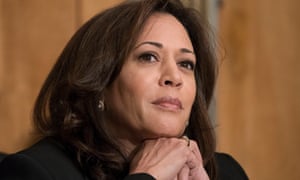


Kamala Harris, the Democrat senator from California. Photograph: Michael Reynolds/EPA


The left feminist tradition suggests that there is a way to change a society defined by “asymmetrical giving”: through better social provision of those same goods, through such mechanisms as family leave, childcare, healthcare, care for the elderly, equal wages. Such provision would empower women to choose whether or not to provide moral and material support to men – and, thus, would gradually change what men and women are.

The conclusion of Down Girl throws up its hands. Manne writes that she is “pretty pessimistic about reasoning with people to get them to take misogyny seriously”. This is fair; she has stated from the outset that her goals are diagnostic. And as Mary Beard’s Women & Power shows, there are plenty of reasons to feel “gloomy” about the prospects for change: the history of men keeping women from governing our own lives can be traced back to the roots of western culture.

Yet it seems crucial for feminist thinkers to strategise about building power. This will mean identifying practical measures that can make the lives of all women better.

At one level, the #MeToo moment is clearly a response to the grotesque, overt misogyny of Trump and those around him. But it also feels like a collective expression of the profound disappointment that a feminism focused on careers has not delivered what it promised – that we are all still putting up with the same old forms of oppression in the workplace that we saw on Mad Men. The feminism that said the answer was to seek professional status swore that if a few women could only get into power, the benefits would trickle down. Hillary Clinton was its incarnation – and suffered its most public betrayal. She worked harder than anyone, had more experience than anyone, put up with every humiliation, won over the bankers and generals, and was still denied “her turn”.

Down Girl is full of sadness about Clinton. Some of it I agree with; some of it I don’t. (I would prefer never to argue with another woman about Clinton again.) But American feminists cannot accept that a female leader will always, necessarily be doomed – for the sake of Karen Gillibrand or Kamala Harris, or whoever comes after, as well as all of us. Not only is misogyny “still a thing”. As Trump and his cronies eviscerate the state, and appeal to their base’s wounded masculinity, it is poised to become more of a thing than ever.

• Down Girl: The Logic of Misogyny is published by OUP USA.


Share:

EastEnders: Jessie Wallace to return as Kat Moon


 Kat_JessieWallace


She was last seen dicing with death in EastEnders spin-off Redwater, but it seems that Kat Moon has made it through her ordeal and is heading back to Walford.
Fans left fearing that Kat had met her maker in the BBC1 drama can be reassured: Jessie Wallace is set to reprise the role but in the more familiar environs of Albert Square.
Show boss John Yorke – who was instrumental in creating the Slater clan and masterminded the soap’s famous “You ain’t my mother!” cliffhanger – has signed Wallace back up for a fresh stint on EastEnders.
The news should please devotees left with unanswered questions after Kat was seen at sea battling with killer priest son Dermott, only for the axe to then fall on Redwater following disappointing ratings.

Kat and Alfie: Redwater

EastEnders isn’t commenting on Wallace’s return nor offering word as to whether husband Alfie (Shane Richie), nan Mo (Laila Morse) or even daughter Zoe (Michelle Ryan) will be joining Kat, but a source told The Sun:
“John [Yorke] loves the Slaters. A lot of people thought he might bring some of them back. He believes they’re long-standing favourites who should be at the heart of the show and thinks Kat’s return will be a hit.”
Kat and Alfie were last seen on EastEnders in 2016 when they left London for Spain after winning big on a scratch card, only to then resurface two years later in Ireland for the six-part Redwater.
Jessie Wallace is currently starring in the pantomime Snow White and the Seven Dwarfs at the Churchill Theatre in Bromley, but is expected to be back on the set of EastEnders in early 2018.
Share:

Poet Paul Muldoon adds Queen's Gold Medal to poetry awards


Honoured: Paul Muldoon

Northern Ireland poet Paul Muldoon has won the Queen's Gold Medal for Poetry 2017.


Muldoon has produced 12 major collections, as well as children's books and song lyrics.

Poet Laureate Dame Carol Ann Duffy paid tribute to the Co Armagh man as a contemporary of Seamus Heaney.

"Paul Muldoon is widely acclaimed as the most original and influential poet of the past 50 years and is rightly celebrated alongside Seamus Heaney," she said.

"His poetry displays a restless, playful brilliance, forever searching for new ways to channel his ideas and new language to dress them in."


Muldoon was born in Portadown in 1951.

He published his first collection of poetry in 1973.

In 1981 he became a Fellow of the Royal Society of Literature.

He has lived chiefly in the United States for the last 30 years, teaching at Princeton University and more recently editing poetry for The New Yorker magazine, before giving that up earlier this year.

Duffy added: "He is ambitious, erudite, witty and musical.

"He can experiment with form and stand tradition on its head, craft a tender elegy or intimate love poem with equal skill.

"His work is of major significance internationally - poetry of clarity, invention, purpose and importance which has raised the bar of what's possible in poetry to new heights."

Muldoon is the youngest of a famous group of poets from Northern Ireland, including Heaney and Michael Longley, centred around Queen's University in Belfast, who gained prominence in the 1970s.

Mr Longley also won the Queen's Gold Medal for Poetry, in 2001.


Muldoon, who delivered a tribute to Heaney at the Nobel Prize winner's 2013 funeral in Dublin, is set to be presented with his medal by the Queen next year.

He previously paid tribute to the place he grew up, a farm on the Armagh side of The Moy area, which he described as a "beautiful part of the world".

He said in 2001: "It's still the place that's 'burned into the retina', and although I haven't been back there since I left for university 30 years ago, it's the place I consider to be my home."

Muldoon worked for the BBC in Belfast during the late 1970s and early 1980s, before moving to England to teach at the University of East Anglia and at Caius College and Fitzwilliam College, Cambridge.

He emigrated to the United States in 1987.

He now lives in New York City with his wife, the novelist Jean Hanff Korelitz, and their two children.

Muldoon has won a number of awards, including the Pulitzer Prize for Poetry in 2003.

Belfast Telegraph
Share:

Monday, October 16, 2017

Thursday, October 05, 2017

The best of October’s international art fairs


All eyes are on the capital this October as Frieze Week returns and with it a huge range of stellar gallery exhibitions, which run alongside Frieze London and Frieze Masters (5–8 October). Among the satellite events worth visiting are Moniker and The Other Art Fair at the Old Truman Brewery, as well as the 1:54 Contemporary African Art Fair at Somerset House (5–8 October). Now in its fifth edition, 1:54 features 41 galleries from 18 countries, drawing attention to more than 130 artists from Africa and across the diaspora. Look out for the eight solo exhibitions which include presentations by Nidhal Chamekh (Selma Feriani Gallery), Ndikhumbule Ngqinambi (Barnard Gallery) and Safaa Erruas (L’Atelier 21). The special projects this year include a solo exhibition of the British-Moroccan photographer Hassan Hajjaj (5 October–7 January 2018), and a sound installation by Nigerian artist Emeka Ogboh. As always, the fair is accompanied by an impressive talks programme, curated by Koyo Kouoh.


Michael Garnette Sittin’. © Hassan Hajjaj. Special Projects, 1:54 Contemporary African Art Fair


In the centre of town, BADA partners with one of the finest London hotels to host an event for collectors, curators and interior designers (6–8 October). At BADA Collection at The Lanesborough, 13 dealers display a variety of objects dating across 11 centuries, from fine art and furniture to antique boxes and jewellery. Highlights include a limestone waterspout dated around 1150–1250 (Beedham Antiques Ltd), a demi-lune commode by the Parisian ébéniste François Linke from around 1890 (Adrian Alan), and a Tang dynasty Changsha ewer (J.A.N. Fine Art).


Green Man waterspout (c. 1150–1250), Anglo-Norman, Caen. Beedham Antiques Ltd at BADA Collection at The Lanesborough


In Paris, FIAC – Foire internationale d’art contemporain returns to the Grand Palais from 19–22 October. For its 44th edition, the fair brings together over 190 galleries from across 30 countries – including an impressive 40 new exhibitors. The event remains committed to emerging art – through the Lafayette sector, in which 10 young galleries stage work by one or two artists – as well as performance-based work. Parades for FIAC, organised in association with the Musée du Louvre, features 18 artists, including Lawrence Abu Hamdan, Trisha Brown Dance Company and Jeremiah Day. Following its launch last year, the On Site sector stages around 40 sculptures and installations at the Petit Palais and on the Avenue Winston Churchill (look out for works by Ida Ekblad, Falke Pisano, and Antoni Tàpies), while American artist Oscar Tuazon has been invited to create a project on Place Vendôme. This year’s fair also sees the reintroduction of a design sector featuring five leading French galleries, among them Eric Philippe and Patrick Seguin.

In Germany, HIGHLIGHTS International Art Fair Munich is at the impressive Munich Residenz from 25–29 October. The fair, now in its eighth edition, welcomes around 40 international dealers offering works from the Middle Ages to the present day. Returning exhibitors include Galerie Thomas and Wienerroither & Kohlbacher, which shows a selection of Viennese secessionist works. Among the newcomers are Galerie Luzán, which brings a lively geometric composition by Max Ackermann, and Senger Bamberg Kunsthandel. The latter brings a polychrome limewood Madonna and Child dated to around 1420, while another Bamberg-based exhibitor, Christian Eduard Franke Kunsthandel, offers a pair of globes by John and William Cary. Painting is well represented too: Kunsthandel Giese & Schweiger from Vienna presents a 1935 snowscape by Alfons Walde, while a verdant landscape by Kirchner is offered by Wienerroither & Kohlbacher.

Further afield, New York welcomes back the 26th edition of the celebrated International Art Fair for Prints & Editions (IFPDA Print Fair), which moves from the Park Avenue Armory to a larger venue, the River Pavilion at the Javits Center (26–29 October). Part of New York Print Week, 81 dealers (including five making their debut) offer everything from Old Master prints to contemporary works. Among the UK participants are Alan Cristea Gallery, Paul Stolpe, and Sims Reed.


Five-fold screen (c. 1880), French. Butchoff Antiques at San Francisco Fall Art & Antiques Show


On the West Coast, the 36th edition of the San Francisco Fall Art & Antiques Show takes over Fort Mason Center and hosts 50 international dealers offering a broad range of works (25–29 October). This year’s theme, ‘Flower Power: Floral Imagery in Art, Antiques & Design’, celebrates the 50th anniversary of San Francisco’s Summer of Love, and sees a display of work that draws on the iconography of flowers – be it in jewellery, ceramics or paintings. The theme is beautifully illustrated by a five-fold screen at Butchoff Antiques, decorated in the early Romantic manner with a series of painted fête galante scenes, and a Davenport ironstone vase and cover, dated to around 1820, on the stand of Janice Paull. For painting, head to Trinity House, which offers Tranquility by John William Godward, a disciple of Lawrence Alma-Tadema, while a more abstract take on the theme can be found at Foster-Gwin, which offers a vibrant, gestural composition by the Abstract Expressionist painter, James Kelly.


Share:

Dbanj speaks on Psquare reported split


D’banj has waded into the ongoing drama between the PSquare brothers

The Psquare brothers have been in the news for a couple of weeks over issues of separation.

Kokomaster, as D’banj is popularly called while speaking in an interview with NET, blamed the media for the extremity of the fight.

According to him, the fight between the brothers would not be worse if the media allowed them handle issues privately, adding that brothers will always fight.

“The media should sit back and let them settle their issues amicably.

“They’re making it worse by writing all sorts of stories about them.

“Brothers will always fight and get back as brothers, but the media should not write negative stories in a bid to make money off the headlines,” Dbanj said.

Recently, Peter of psquare was seen performing alone at a concert in Dallas.


Share:

Davido: I don’t believe my friend died of excess alcohol – Tagbo’s friend


A friend to the late Tagbo, the young man who died on his birthday and was allegedly abandoned by super star Davido and his crew has blasted the singer.

Tagbo’s friend, identified as Uthman Oluwadamilola, said ‘autopsy will reveal the truth’.

Oluwadamilola further shared photos of Tagbo with Davido and his car which was abandoned.

He wrote, “I don’t want to believe this story because you are mature to know your limit and this is not the first time hanging out with @davidoofficial.

“@tagb0 please wake up and tell us the true story. I won’t believe until I see u no more.

“I can’t see someone like you in my entire life, you don’t look down on anyone, fuck fame and any fucking shit attached, tag we got plans nd now all is gone.

“RIP! But this is not the right time. I won’t feel till now until I need you as I will always do anyone who said ‘na too much alcohol or whatever.’

“Almighty God will throw sorrow in their family life and they will die early death insshallah, because no be today even thou you drank anything it your birthday no one is right to blame you, f*ck fake friends#lessonlearned

“F**k fake friends! F**k all of you! Autopsy will reveal the truth.


“If na Lati or Mayorkun or Dremo, are you going to abandoned them? F**k anybody saying sh*t! God will bring early death upon anyone blaming Tagbo.”


Share:

Wednesday, September 27, 2017

'The Night Of' Was a Win, Just Not for Brown People


Screencaps via YouTube | Art by Noel Ransome


Let's rewind to last week when we all watched Riz Ahmed become the first male actor of Asian descent to win an acting Emmy for his role as Nasir in HBO's The Night Of. That same evening, black professionals came away as big winners too, including Lena Waithe for Master of None, for the show's tremendous "Thanksgiving," and Sterling K. Brown for This Is Us. In comparing the seven black and two South Asian winners, I saw a problem that's easy to overlook. We're so conditioned as people of color to be thankful through a guise of "firsts:" first Emmy, first Oscar, and first instance of representation, that the finer details get distorted.

Granted, Hollywood found its leading South Asian actor to give an Emmy to; I couldn't be happier for Ahmed, but it all comes with a caveat. The Night Of is nuanced in its portrayal of a man wrongly convicted of a crime; they humanized the American Muslim like no other show has. It deserves credit for this. However, the show achieves this by making the idea of "prejudice" a footnote and using his South Asian race as a catalyst to his perceived guilt. In doing so, white characters such as lawyers, officers, and people in power are portrayed as respectable, while Nasir becomes yet another person of color criminalized by the justice system. You're never told who the culprit of his crime is, so the question of his innocence always lingers.


Yes, it's great that he won. But by winning for a role that adheres to/exploits/underlines stereotypes and comes off like a weak celebration of "representation." And there's that word again, "Rep-re-sen-ta-tion." It sounds good on the tongue, but I trust the word like I trust a Nazi with "free speech." What is that word supposed to mean anyway? Are we talking looks—is it a quota to fill? Absent answers to those questions, you get someone's bootleg version of the shit, someone's guesswork.

As a black man looking in from the outside, I was curious about what an actor who's unmistakably South Asian thought about this. Much of what South Asian Hollywood is going through mirrors what black Hollywood still goes through with their own set of stereotypes; there's a shared kinship in that. Rizwan Manji, an Ismaili Muslim of Gujarati Indian descent, would, of course, understand that more than I could. Currently, he has a recurring role in USA Network's Mr. Robot and has a long history of Westernized acting roles.


"It's hard because casting usually depends on where you're coming from. If you're writing for a show like 24, or Homeland, it becomes a problem if all you have is brown people being accused of something, looking guilty, or blowing stuff up, and killing people," Manji told me. "Having one episode where that brown guy is actually good, just doesn't balance it out, so the misconception is that, 'Oh, I covered my bases,' but the [negative] images overwhelm the good."

Manji should know. His first major audition was as a terrorist for a film that portrayed the first World Trade Center bombing. A major role he landed was being a cab driver in the TV drama Criminal Intent. While he acknowledged that "representation" isn't as cheapened for Muslims as it was in the 90s and early 2000s, he still sees the problem in some praised portrayals.


Rizwan Manji. Chris Haston/NBC


"My answer to what I feel is the best representation in Western media is that it hasn't happened yet. We've seen glimpses, but they often come off in a way that's easy for Western audiences to take in. Like when Aziz's character in Master of None distances himself from his heritage, from being a Muslim. I don't know if there's been a Muslim or South Asian Cosby Show for instance. Where we're just in your home, and we're perfectly relatable and happy at the same time."

In the case of Dev from Master of None, he's a Tinder-dating, liberal-thinking, bacon-loving American, and by those standards is completely digestible as a character for Western audiences. On one hand, he can be celebrated for being far and away from the terrorist stereotype, but on another, it comes at the cost of suppressing a belief system that's in great need of some positivity.

"Many people don't even know a Muslim or South Asian person personally. This is how they get their information, from television or film," says Manji. "If all you're watching are these celebrated roles that portray us in this negative light, you're going to live your life with a sense of fear of Muslim people that especially look traditionally Muslim. Without some visible change, it can become a dangerous situation."

That danger comes in the form of everyday islamophobia—post-9/11 rhetoric, Muslim bans—they all contribute to this bootleg idea of what South Asians are like on and off film. Despite the 201 terrorist incidents that occurred on US soil from 2008 to 2016; 115 of those cases being from right-wing extremists, South Asians still struggle with bleak or extreme forms of imagery.


Image courtesy of Sue Obeidi


Thankfully, there are people like Sue Obeidi who work to remedy this. Her job is to largely keep the suits behind the camera honest. She's the director of the Hollywood Bureau for the Muslim Affairs Council and had a direct say in how Disney's new live-action Aladdin should portray South Asians.

"We're not about being watchdogs, and we don't demand that the storyteller change his or her vision. But if you come to us, we'll give you honest feedback, because we know that audiences are very intelligent, and they can see through bullshit."

'We're not monolithic. Whenever there was a "good" Muslim or South Asian, it was watered down, not so religious. Later, it was the very religious character that blew things up in the name of Islam. To do this right, we have to welcome the good, liberal, but religious Muslim. We welcome all levels of South Asian, and if we had all that in Hollywood, we'd be fine, but we don't make all the decisions"


But Obedi continues to help guide those that call the shots, to ensure that the industry isn't simply giving South Asians scraps and defining "representation" for themselves. Despite the tone of The Night Of, Ahmed's win gives her hope that things will change.

"We are about 1.7 billion in the world and out of that 1.7 billion, about 99.9999 percent are just like everyone else. Our differences as a people ultimately unite us and make us more powerful as members of this human race, and film and television need to strive to reflect that."

Simply put, The Night Of was television, but in our effort to big-up roles in accordance to what the industry deems as "representation," we can't lose sight of the fact that South Asians, like any POC, are as much like everyone else and come in all varied forms. We don't need a white-as-hell network to define what that means via the Emmys. We have to continue to demand that we are allowed to define that for ourselves as viewers, and as creatives, before losing sight by way of another "first."

Follow Noel Ransome on Twitter.


Share:

Monday, September 25, 2017

Popular Nigerian music star, impregnates older lover, abandons baby


If what we hear is true then popular singer, Myro, is about to get himself in a big mess for impregnating and abandoning a lady who is determined to blackmail him into accepting responsibility because he is not ready to play dad hence insiders say the singer has abandoned her!


The singer who has been described as randy and a serial heartbreaker according to an insider could be in hot soup soon, as the lady will stop at nothing to destroy him.

The insider said: “If there is one weakness he has, it is women. As I speak to you there are watsapp messages which were probably leaked from his phone which he is said to have lost during a recent video shoot.

“In the chats the lady (real name withheld) is threatening fire and brimstone that unless Myro takes responsibility, she will leak the story to the media along with pictures of their child which she just delivered!

“However, Myro keeps denying. This should come as a rude shock to him that the story is finally in the media. Poor guy he can’t even tame his passions.”

The last chats as below


Share: